
AI Services from TechNative
Modular building blocks. Integration built to fit.
We build AI into recurring tasks and processes that can be optimised. Modular where it can be, custom where it must be. Always in your own environment, and run like a normal software implementation.
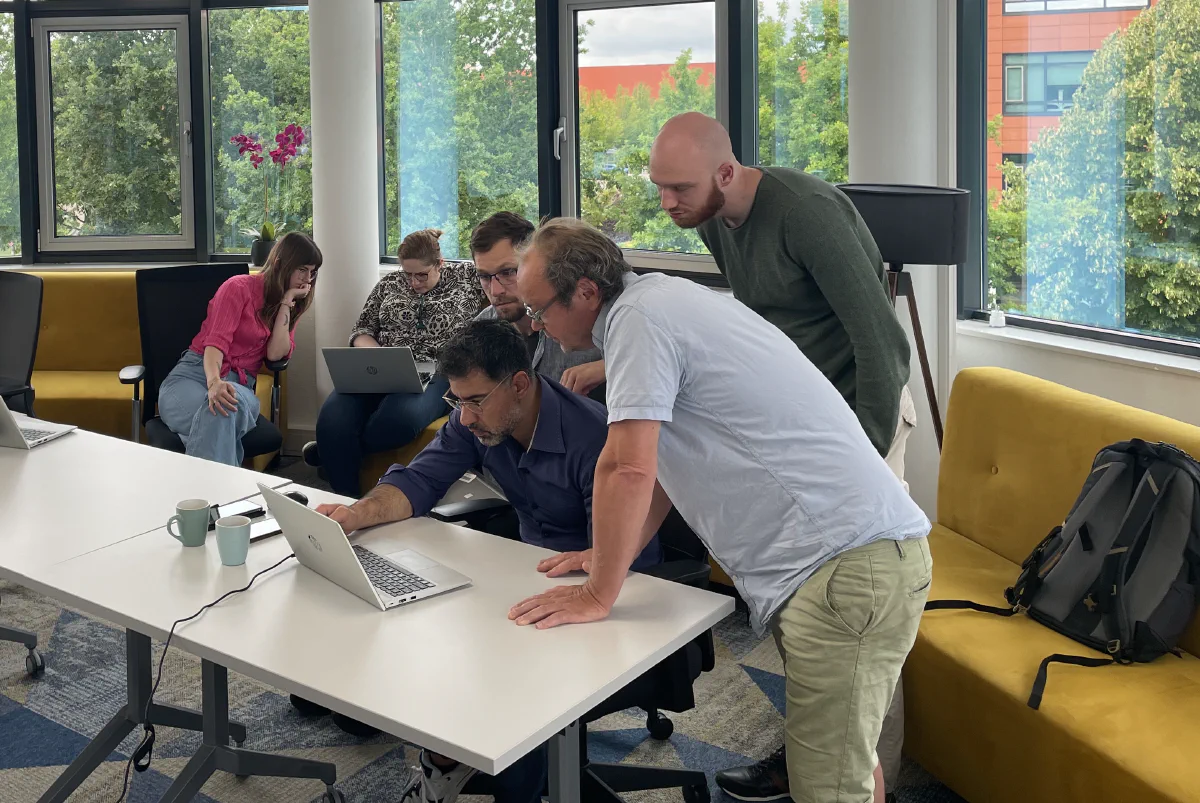
Our approach
Modular, custom and managed
Modular
Building blocks that already work, switched on per process.
Custom
Connections to the systems you already use, with no intermediary layer.
Managed
Security, updates and maintenance are part of it. Not a separate phase afterwards.
95%
of generative AI pilots deliver no measurable business impact, according to MIT research. Usually not because of the model itself.
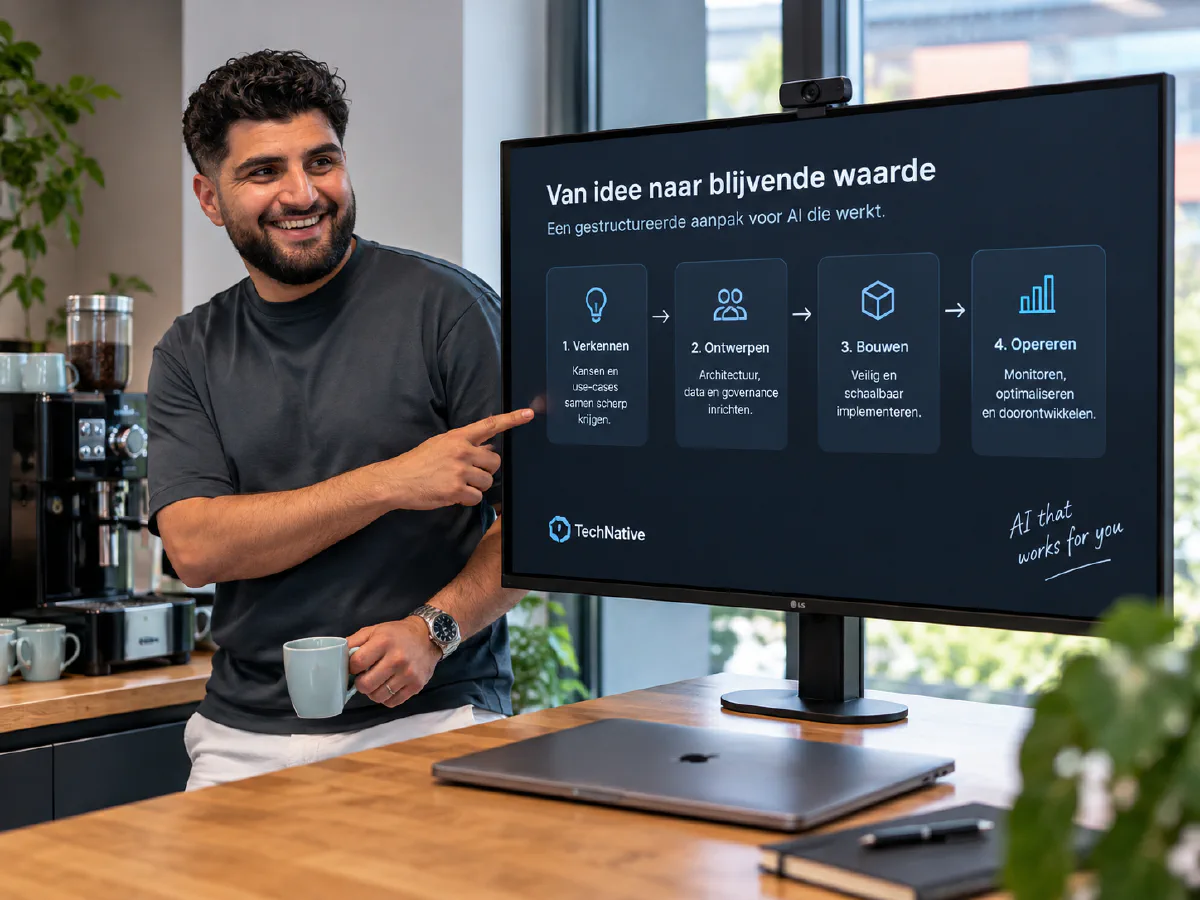
In practice
Why AI engagements stall, and what we do differently
Why it often stalls
AI gives a unique illusion of simplicity. A department head with no technical background can stand up a working agent in a few hours today with low-code tooling. Because the barrier to entry is so low, every department starts on its own, separately from the others.
Switching on an agent is easy; maintaining it is another discipline entirely. The moment you scale those separate initiatives, the architecture crumbles: fragmented data flows, automated decisions that contradict each other, rising API costs and gaps in security.
Not the technology, but the direction
The cause usually isn’t the model, but integration, ownership and direction. AI projects are rarely run like a normal software implementation, and AI is a horizontal capability being pushed into a vertical organisational ladder.
Conway’s Law, 1967: any organisation that designs a system will inevitably produce a design whose structure copies that organisation’s communication structure.
What we do
We run an AI engagement like a software implementation: one owner, agreed measurement points, and the people who do the work at the table from the start.
Your data, your AWS resources and the configuration of your environment stay yours; generic building blocks and our own software stay ours and are maintained for you. No prototype that has to be rebuilt from scratch six months later.
Where we focus
Where we focus
Recurring work with a fixed shape and a checkable outcome. That's where the time saved is greatest and the risk is smallest.
Procedures with internal audits
ISO, NIS2, NEN, WTTA — really any procedure where you have to supply evidence. Collecting, checking and preparing that evidence is work that repeats every round.
Recurring tasks
Assessing applications, summarising case files, drafting correspondence, moving data between systems that don't talk to each other.
Answers from your own documents
Make handbooks, contracts and files searchable with source references, so the answer can be checked.
Looking beyond one department
Removing one bottleneck often just moves it. We look at where the work comes from and where it goes before we build.
FAQ
Frequently asked questions
Want to know what makes the most sense for your situation? Ask Pim. Describe the work that costs your team the most time. You'll get a straight answer about what can be automated, what is better left to hand, and when doing nothing is the cheaper option. Book a moment with Pim or one of the team.

-
A good starting point is recurring work with recognisable input, a clear outcome and enough examples or source information. If the result can’t be checked, we usually don’t start.
-
No. We prefer to start with one process where the time saved and the quality are measurable. We do set up the technical foundation so later applications can build on it.
-
Yes. Where needed we connect to systems such as ERP, DMS, Microsoft 365, mailboxes and ticketing systems. Per connection we decide which data and which actions are necessary.
-
They don’t have to go automatically. We assess what’s usable, what can be made production-ready and what is better replaced.
-
Per application we agree ownership, access rights, measurement points and management. TechNative can handle the technical management; the functional responsibility stays with the organisation.
-
We agree measurement points up front: processing time, number of manual steps, error rate, quality or cost per item processed. Then we judge the application on that outcome.
Further reading
Where to read on
SME AI Platform
Our ready-made AI platform on an AWS foundation, deployed modularly in your own account.
AI Prototyping Sprint
From idea to a working prototype in production, with monitoring and management. In one week.
Workflow automation with AI
Audits, self-assessments and supplier questionnaires prepared, with a source reference on every line.
What is Amazon Bedrock?
The AWS service it all runs on, explained in plain language.
Get started
Start with one recurring job
Pick the work that costs the most time, and in a few weeks we'll build a working module on your own data. The AI Readiness assessment is often funded by AWS.